
Draft → publish
Build the week, then publish. Staff are notified in the app, and the schedule is the same source of truth the time clock measures against.
Scheduling & Labor
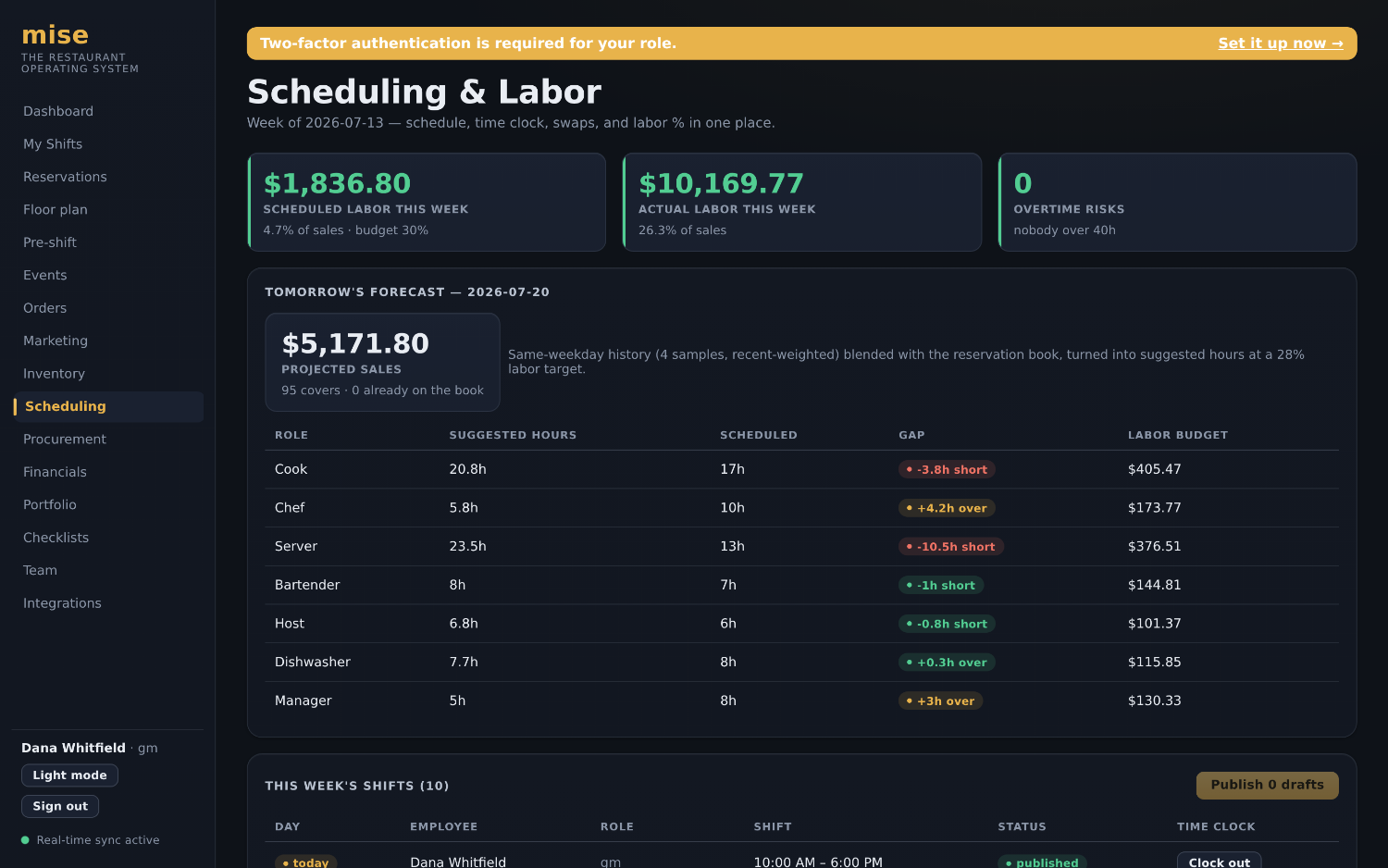
Build and publish schedules, let staff swap shifts with manager approval, and run a time clock — all measured against labor % vs. live sales. Overtime is flagged before it's worked, and the forecast knows about tonight's private event.
What's inside
Build the week, then publish. Staff are notified in the app, and the schedule is the same source of truth the time clock measures against.
Staff post and claim open shifts; managers approve. Overtime and availability conflicts are checked before a swap goes through.
Requests, approvals and recurring availability live next to the schedule, so you never publish a shift someone can't work.
Mise flags a shift that would push someone into overtime as you build it — not on the payroll report a week later.
The dashboard shows labor as a percentage of today's actual sales, updating as checks close — the number you actually manage to.
A booked 120-guest private event shows up as demand in the forecast, so you staff for it before it's ever drafted into shifts.
Compliance, built in
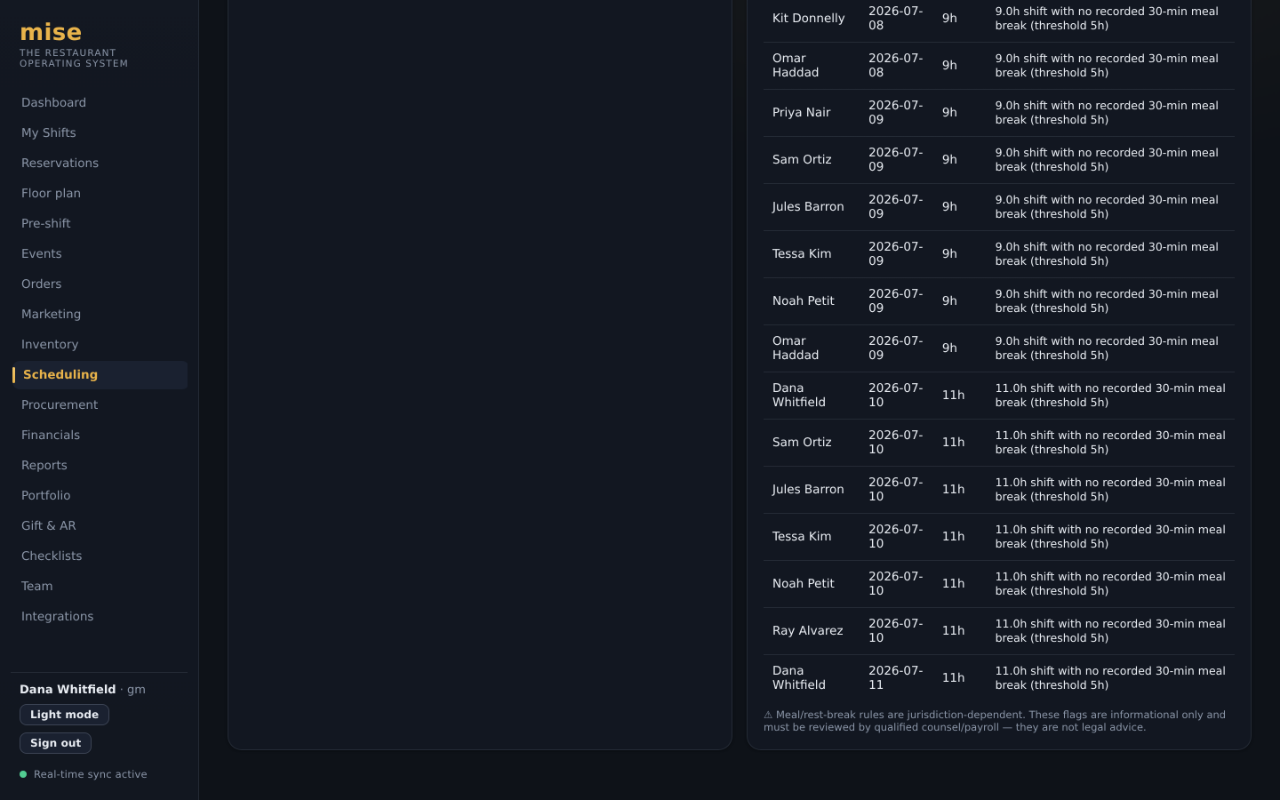
The time clock enforces break rules and computes tip pools automatically, so compliance isn't a spreadsheet you reconcile after the fact.
One source of truth
Every punch flows into prime cost the moment it happens, so labor % and the P&L are always current — no export from a standalone scheduler, no re-keying into accounting.
Retire the point solution
One system that already runs your restaurant — no extra login, no nightly export, no re-keying.